Get in Touch
We will get back to you within 24 hours.
We will get back to you within 24 hours.
Welcome to MVS Blog
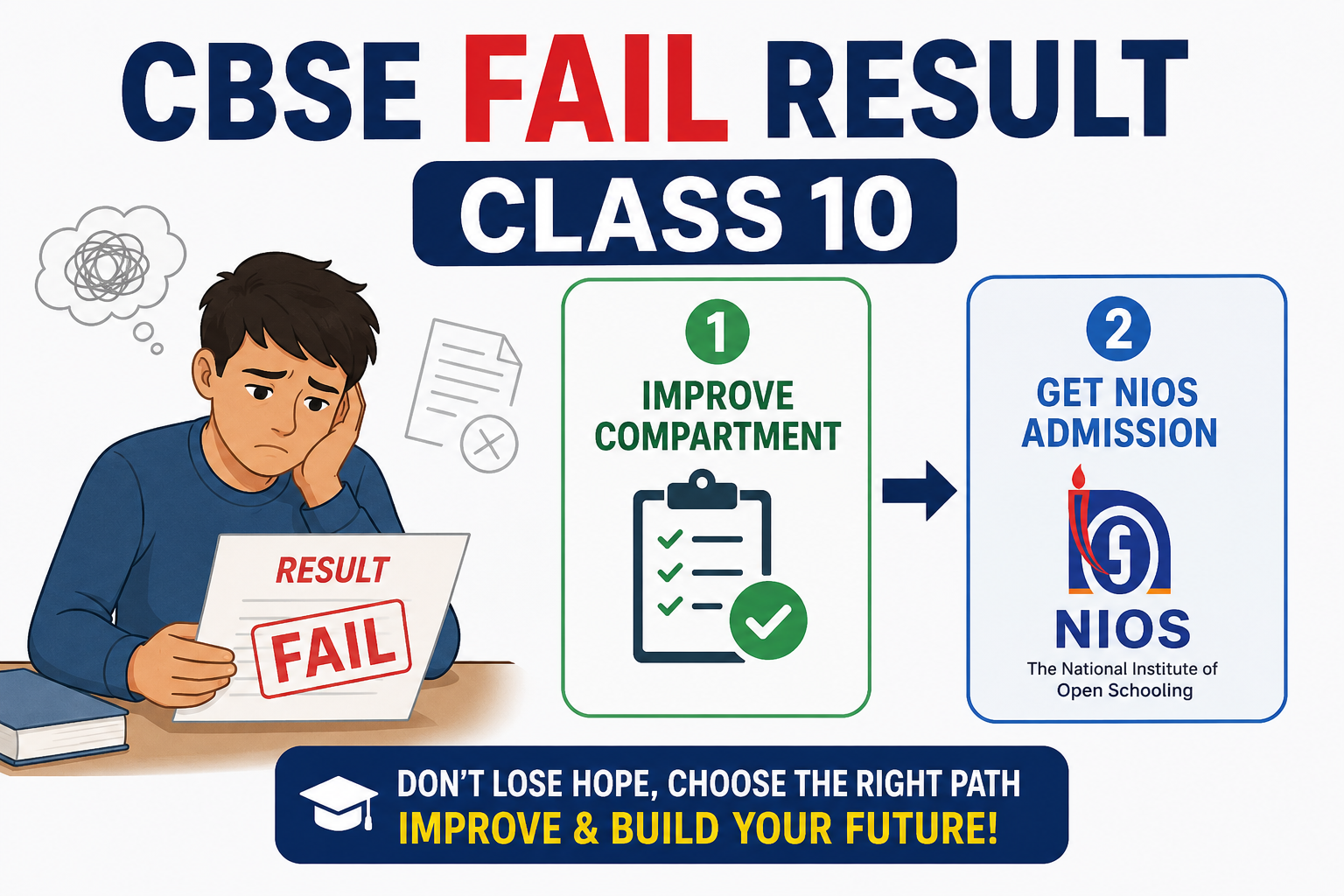
Many students feel disappointed after seeing the CBSE Class 10 fail result, but failing in one or more subjects does not mean the end of their academic journey. Every year, thousands of students face this situation due to exam pressure, lack of preparation, or difficulty in specific subjects. Fortunately, the Central Board of Secondary Education (CBSE) provides several opportunities for students to continue their education without losing an entire year.
After failing the CBSE Class 10 exam, students still have multiple options to recover and move forward confidently. They can either appear for the CBSE compartment exam to improve their marks in failed subjects or choose alternative education systems that offer flexible learning opportunities. Understanding these options carefully can help students make the right decision for their future studies and career goals.
Among all available solutions, the CBSE compartment exam and admission to the National Institute of Open Schooling (NIOS) are considered the two best options. The compartment exam allows students to reappear in failed subjects and continue their education in the regular CBSE system. On the other hand, NIOS offers flexible learning, multiple exam opportunities, and recognized certification for students who want an alternative path after failing Class 10.
The CBSE Class 10 result is based on both theory examinations and internal assessments. Students must achieve the minimum required marks in each subject to be declared “Pass.” If a student is unable to meet the passing criteria in one or more subjects, the result may show either a compartment status or a fail status depending on the number of subjects failed.
A student is considered failed in CBSE Class 10 when they do not secure the minimum passing marks required by the board. To pass a subject, students generally need at least 33% marks combined in theory and internal assessment. If a student scores below the required marks in multiple subjects, they may not qualify for the compartment category and can be declared failed overall.
Failing can happen for several reasons, including low preparation, poor performance in theory exams, lack of attendance, or weak understanding of important concepts. However, CBSE provides opportunities for improvement through compartment exams and other academic options.
Many students confuse the terms “fail” and “compartment,” but both are different in the CBSE system.
Students who fail in only one or two subjects (as per CBSE rules for that year) may be placed in the compartment category. These students are allowed to reappear in those subjects through compartment examinations without repeating the full academic year.
Students who fail in more subjects than the allowed compartment limit are usually declared failed. In this case, they may need to repeat the academic session or choose alternative education options like NIOS.
The compartment option is beneficial because it gives students a second chance to improve their marks quickly and continue their studies without major delays.
CBSE follows a grading and percentage-based evaluation system for Class 10 students. To pass:
Students receiving an “E” grade in a subject may need to appear for compartment exams or seek alternative academic pathways. Understanding the grading system helps students identify their strengths and weaknesses and plan their next steps wisely.
Failing Class 10 can feel stressful, but it is important to respond calmly and make practical decisions instead of panicking. CBSE provides multiple chances for students to continue their studies, so the next steps you take are more important than the failure itself.
The first and most important step is to stay calm and carefully review the marksheet. Many students react emotionally, but understanding the actual reason for failure is crucial. Check each subject’s marks and identify where you performed well and where you fell short.
Look closely at whether you failed in one subject or multiple subjects, as this will decide whether you are eligible for the compartment exam or need to consider other options. Also, check internal assessment marks because sometimes theory marks are low, but internal scores can help improve the overall result.
After reviewing the marksheet, students should talk openly with parents and teachers. Teachers can help identify weak areas and suggest whether improvement is possible through compartment exams. Parents can provide emotional support and help in choosing the right academic path.
This discussion is important because experienced guidance can prevent wrong decisions. Sometimes students think they must repeat the year, but in many cases, compartment exams or alternative schooling options like NIOS (National Institute of Open Schooling) may be better choices.
Once you understand your results and receive guidance, the next step is to choose the right path. If you have failed in one or two subjects, the CBSE compartment exam is usually the best option because it allows you to continue in the same board without losing a year.
However, if the performance is weak in multiple subjects or the student wants a more flexible learning system, then admission to NIOS can be a better alternative. NIOS allows self-paced study, multiple exam attempts, and a stress-free academic environment.
The key is to choose a path that matches your current academic level and future goals, rather than making a rushed decision.
The CBSE compartment exam is a second opportunity given to students who could not pass one or two subjects in the Class 10 board exams. With the right preparation and strategy, students can clear these exams and continue their academic journey without repeating the entire year.
Not every student who fails is eligible for the compartment exam. CBSE allows compartment exams mainly for students who have failed in one or two subjects (as per the latest CBSE rules for that academic year). Students must also have passed the remaining subjects and met internal assessment requirements.
If a student fails in more than the allowed number of subjects, they may not be eligible for compartment exams and might need to explore options like repeating the year or switching to NIOS.
Students do not apply directly in most cases; the school usually handles the registration process for compartment exams. After the CBSE Class 10 results are declared, schools collect details of eligible students and submit their applications online through the CBSE portal.
Staying in touch with your school is important to avoid missing deadlines.
A focused study plan is essential because the time available for preparation is limited. Students should first identify the specific topics they struggled with in the board exam.
Revising NCERT textbooks thoroughly
Focusing only on the failed subject(s)
Creating a daily revision timetable
Practicing sample papers and previous year questions
Consistency is more important than long study hours.
To improve performance, students should focus on smart preparation rather than covering everything again.
A clear understanding of concepts can significantly improve scores in a short time.
Clearing the compartment exam has several advantages for students:
No need to repeat the entire academic year
Continue studies in the same CBSE board system
Saves time and reduces academic delay
Boosts confidence after overcoming failure
Keeps future career and admission plans on track
Passing the compartment exam allows students to move forward smoothly without switching education systems.
After a CBSE Class 10 fail result, students often feel pressured and confused. In this situation, small mistakes in preparation or mindset can further reduce the chances of clearing the compartment exam or improving performance. Avoiding these errors is just as important as studying.
One of the biggest mistakes students make is ignoring the subject they failed in or found difficult earlier. Many students repeat the same study pattern without focusing on weak areas.
Ignoring weak subjects only repeats the same mistakes in the compartment exam.
Another common mistake is delaying preparation, thinking there is enough time. The gap between the main result and compartment exams is usually short, so waiting too long can create unnecessary pressure.
Early preparation increases confidence and improves understanding.
Many students rely too much on guess papers or selective questions. While they can help in revision, they should not be the main source of preparation.
Relying only on expected questions can be risky if the actual exam paper is different.
Failing Class 10 can affect confidence, but losing hope is one of the worst mistakes a student can make. A negative mindset can directly impact performance in compartment exams or future studies.
Treat failure as a learning experience
Focus on improvement instead of past results
Stay motivated with support from family and teachers
Confidence plays a key role in turning failure into success.
NIOS is one of the most popular alternatives for students who are unable to clear CBSE Class 10. It provides a flexible and student-friendly system that allows learners to continue their education without the pressure of a regular school environment.
NIOS (National Institute of Open Schooling) is an open schooling board recognized by the Government of India. It is designed for students who cannot continue in regular schooling due to academic, personal, or other reasons.
This system is especially helpful for students who want flexibility in their studies after failing CBSE Class 10.
Students who have failed in CBSE Class 10 are fully eligible to take admission in NIOS. There is no strict restriction based on previous results.
This makes NIOS a strong alternative for continuing education without losing a year.
The admission process for NIOS is simple and fully online:
Students need to upload basic documents during the admission process. These usually include:
All documents should be clear and valid for successful registration.
NIOS has a simple and affordable fee system. Fees depend on the number of subjects chosen.
Students can choose subjects based on their interests and future plans, such as science, commerce, or vocational courses. This flexibility helps students build a customized learning path after CBSE failure.
NIOS is a widely accepted alternative for students who are unable to clear CBSE Class 10. It provides a flexible and supportive learning system that helps students continue their education without repeating an entire academic year.
One of the biggest advantages of NIOS is its flexible learning system. Students are not bound to daily school attendance and can study at their own pace.
This flexibility is especially helpful for students who struggled in traditional classroom learning.
NIOS offers students more than one chance to pass their exams in a year.
This system gives students more control over their academic progress.
The certificate provided by NIOS is fully recognized by:
It is considered equivalent to other national education boards in India.
Less Academic Pressure Compared to Regular Schooling
NIOS is designed to reduce stress and pressure on students.
This relaxed environment helps students rebuild confidence and perform better academically.
After failing CBSE Class 10, students usually feel confused between choosing the compartment exam or switching to NIOS. Both options are valid, but they serve different types of learners. The right choice depends on the student’s current performance level, confidence, and long-term goals.
For students who are weak in only one or two subjects, the CBSE compartment exam is usually the better option because it allows them to continue in the same academic stream without changing boards.
Failed in multiple subjects
Feel stressed with strict exam patterns
Need more time to understand concepts
NIOS is often a better choice due to its flexible learning system and multiple exam opportunities.
Both CBSE and NIOS are recognized boards in India, so career opportunities remain similar after Class 10.
Students from CBSE compartment can continue in regular Class 11 (Science, Commerce, or Arts) after passing.
Students from NIOS can also apply for Class 11 in any stream and are eligible for competitive exams and jobs.
In terms of future scope, both paths are equally valid, provided the student performs well in higher classes.
Factors to Consider Before Making a Decision
Before choosing between CBSE compartment and NIOS, students should carefully evaluate:
A student who can quickly improve in a short time should prefer CBSE compartment, while those needing a fresh and flexible approach may benefit more from NIOS.
Failing Class 10 is not the end of academic or career growth. Students still have several practical pathways to continue their education and build a successful future. The key is to choose an option that matches their interests, strengths, and learning style.
One of the most common options is to continue with higher secondary education after clearing the failed subjects through CBSE compartment exams or by switching boards like NIOS.
Rejoin Class 11 after passing Class 10
Choose streams like Science, Commerce, or Arts
Build a foundation for higher studies such as college degrees
This path is suitable for students who want to follow a traditional academic route and aim for careers in engineering, business, teaching, or other professional fields.
Students who do not want to continue with regular academic studies can opt for vocational or skill-based courses. These programs focus on practical skills and job readiness.
These courses help students gain employable skills quickly and can lead to early job opportunities or entrepreneurship.
Open Schooling and Distance Education Opportunities
Open schooling systems like NIOS provide an alternative way to complete education with more flexibility.
Distance education also allows students to balance studies with other responsibilities, making it a strong alternative after Class 10 failure.
Can students appear for both compartment and NIOS?
No, students generally cannot pursue CBSE compartment exams and NIOS admission for the same Class 10 session simultaneously. If a student appears for the CBSE compartment exam, they must wait for the result before deciding further. NIOS admission is usually chosen when a student does not wish to continue with the CBSE route or is not satisfied with their compartment outcome.
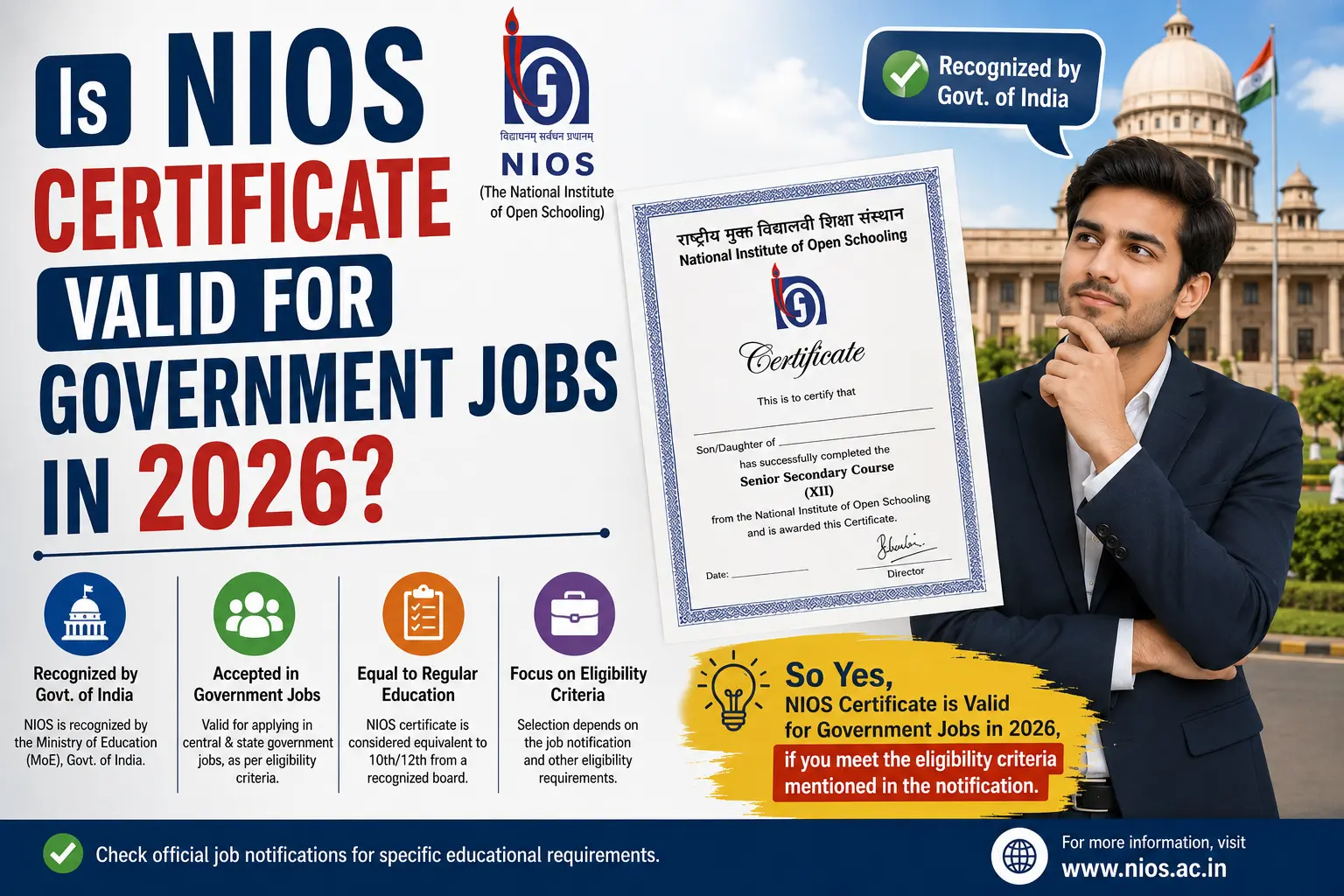
Is NIOS valid for government jobs?
Yes, NIOS is fully recognized by the Government of India. The certificate is considered equivalent to other national education boards like CBSE and ICSE. Students who pass Class 10 from NIOS are eligible for government jobs, competitive exams, and higher education, just like students from regular boards.
How many attempts are allowed in NIOS?
NIOS provides multiple chances to pass exams. Students can appear in public examinations twice a year, and they are allowed to improve or reappear in subjects within the validity period of their admission. This flexibility helps students pass without the pressure of a single attempt.
Will Class 10 failure affect future career growth?
Failing Class 10 does not permanently affect future career growth if the student takes the right steps afterward. With options like CBSE compartment exams, NIOS, vocational courses, and skill-based training, students can still build successful academic and professional careers. What matters most is how effectively they plan and continue their studies after the setback.
Failing in CBSE Class 10 can feel like a major setback, but it is important to understand that it is not the end of a student’s academic journey. Every student has the ability to recover and perform better with the right guidance and preparation. What truly matters is how they respond after the result.
Students should not lose confidence, as CBSE provides structured opportunities like compartment exams to improve marks without repeating the entire year. At the same time, alternatives like NIOS give a flexible and supportive learning environment for those who need a different approach to complete their education.
Both compartment exams and NIOS are genuine second chances that can help students continue their studies and achieve their career goals. With focus, discipline, and the right mindset, students can turn this setback into a strong comeback and build a successful academic future.
0 Response

Stay updated with the latest news, articles and updates directly into your box