Get in Touch
We will get back to you within 24 hours.
We will get back to you within 24 hours.
Welcome to MVS Blog

Picking the best way to keep studying after school matters a lot for students. In India, many feel unsure – should they join an open university like IGNOU? Or go to a standard college instead? With jobs evolving, plus more people wanting freedom in classes, this IGNOU vs Regular university debate comes up way more now.
In this post, we’ll explore IGNOU alongside traditional colleges – looking closely at how they differ when it comes to schedule freedom, credibility, fees, study vibe, job chances, and who each one fits best. So you can figure out which path lines up with what you’re aiming for school-wise or work-wise.

Indira Gandhi National Open University started back in 1985 so people from all over India – and even outside – could study without barriers. Instead of regular classes, it uses distance learning methods that fit different schedules. It runs tons of courses, like short certifications or full master's programs. Some options include undergrad studies, PhDs, diplomas – or quick skill-based credentials.
IGNOU’s a top pick for folks already on the job, learners stuck in far-off spots, stay-at-home parents, or anyone held back by money issues or life hurdles. Backed by UGC, this uni holds weight – its diplomas work just fine for public sector roles or moving up academically.

Most colleges stick to old-school classes held in person. Instead of online options, learners must show up each day for lessons. Besides listening, they join hands-on exercises now and then. Campus life also includes study groups or clubs after class. Such schools might fall under government control, local authorities, independent ownership, or hold special status recognized by law.
Many learners lean toward standard colleges when they crave clear routines, face-to-face time with instructors, or active social scenes on campus. These schools tend to feel familiar, seen as the go-to path for schooling by most people.

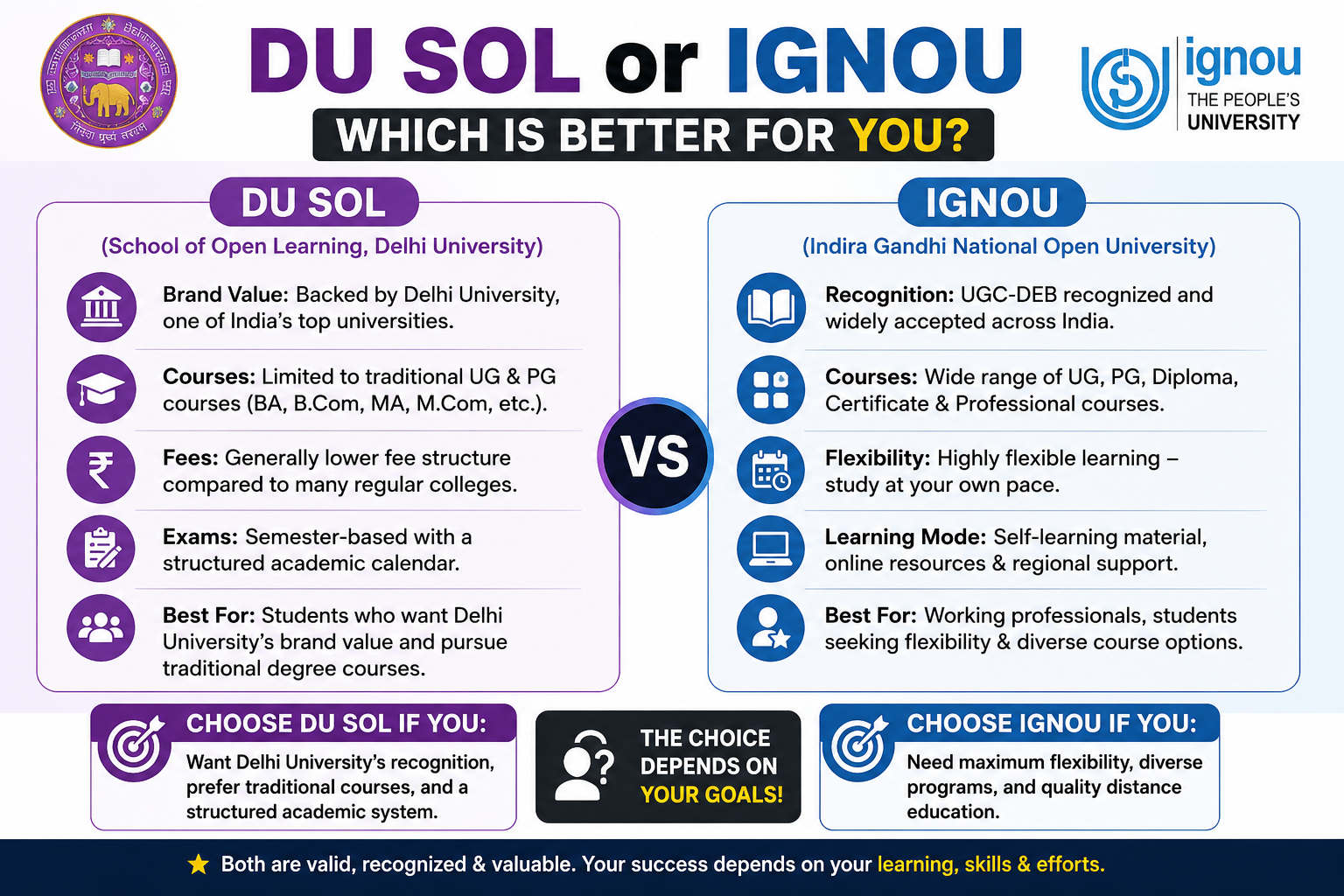
Check out how IGNOU stacks up against regular colleges when it comes to what really matters for students.

One major benefit of IGNOU? It’s flexible. Pupils learn how fast they want, pick when to take tests, while handling jobs or daily tasks. Instead of just books, there are online resources – so studying fits any time, any place.
On the flip side, most colleges demand you show up on time and stick to set routines. Though that setup helps learners who thrive on routine, it’s tough for people juggling work or family duties.
Winner: IGNOU (for flexibility)

IGNOU costs way less compared to traditional colleges. Its pricing aims to help people from every background attend. Learners finish their courses spending just a small part of what private – or even certain public – colleges demand.
Private colleges usually cost more – not just in tuition but also because of extras like housing, commuting, or facility charges.
Winner: IGNOU (for budget-conscious students)
Learn more about IGNOU Admission: Click Here

In comparing IGNOU to traditional classes, each side brings something useful. IGNOU offers organized study stuff made by specialists linked to known schools. Still, missing regular class chats might bother certain students.
Regular colleges give in-person classes, instant help with doubts, hands-on experience, also ongoing tests. Being there daily may boost understanding plus keep students involved.
Winner: Regular University (for interactive learning)
IGNOU degrees have UGC approval, so jobs, govt offices, even colleges at home or overseas accept them. After finishing from IGNOU, you can try tough tests like UPSC or SSC, get into banks, or move on to advanced courses.
Just like that, diplomas from well-known standard colleges get broad recognition – also seen as classic by many.
Winner: Tie (both are recognized)

Regular colleges give lively campus scenes – students join festivals, games, groups, talks, or hang out with classmates. Such moments boost personal abilities, self-assurance, while growing work-related contacts.
IGNOU doesn't offer much in-person interaction since it's built around remote education. Although there are local study spots and guidance meetings, real campus life feels almost absent. Instead of gatherings or events, students mostly work on their own. Because everything’s online, chances to connect face-to-face stay rare. So, even with support options available, the vibe stays distant rather than lively.
Winner: Regular University (for holistic development)

For job chances, what you know and have done counts way more than how you learned it. IGNOU fits best for people already working – learning while doing helps them stand out when applying for roles.
Fresh grads from normal colleges can gain through on-campus hiring, trainee jobs, or real-world experience. However some leading firms choose these students for beginner positions needing dedicated study time.
Winner: It changes based on where you are in your job path or what you’re aiming for
Contact us for Admission: 8882104776

IGNOU is an ideal choice for:
People with jobs who want to move up
Young people studying for tough tests
People who have tight budgets
Folks who live far out in the countryside
People wanting to learn on their own time
If you care about freedom, staying focused on your own, or saving money – IGNOU might fit well. It’s a solid choice when learning matters without the high cost.

A typical college works well for:
Young people just finishing school
People who like clear routines
Folks looking for jobs at college fairs
Those keen on after-school stuff or hanging out with peers
Learners who learn better when a teacher leads them step by step
If your goal’s a classic campus life full of real-world practice along with chatting, studying, and working alongside classmates, then sticking with a standard school might suit you best.

Choosing between IGNOU and a regular college isn't straightforward – what works best hinges on your unique needs, how you learn, money matters, or even where you see yourself down the road.
IGNOU works well if you need freedom in timing, cost that’s easy on the pocket, also reaching courses from far-off places – great for those who learn outside normal paths. On the flip side, regular colleges give clear routines, real campus vibes, along with face-to-face classes, fitting best when someone studies full time.
Think about what matters most before deciding. Picking the right path means IGNOU or traditional college could work – each opens doors to good grades and solid jobs down the line.
0 Response

Stay updated with the latest news, articles and updates directly into your box