Get in Touch
We will get back to you within 24 hours.
We will get back to you within 24 hours.
Welcome to MVS Blog
In recent years, alternative schooling options have gained popularity among students who want more flexibility in their education journey. Many learners from the ICSE background are now exploring different academic pathways in 2026 that allow them to study at their own pace, choose subjects more freely, and balance education with personal goals or career plans.
One such option is the NIOS Admission 2026 Guide for ICSE Students, which helps students understand how open schooling can serve as a practical and recognized alternative to traditional classroom-based education.
Open schooling is a flexible education system that allows students to learn without being tied to a regular classroom structure. Instead of fixed schedules, learners can study at their own peace and appear for exams when they feel prepared.
For ICSE students considering this option, it is important to understand how the system functions, including subject selection, study materials provided by the board, and the examination pattern. The NIOS Admission 2026 Guide for ICSE Students helps clarify these aspects so students can make an informed decision before switching to or enrolling in open schooling.
Students who wish to continue their education through an open and flexible system can apply for admission in 2026 if they meet the basic eligibility requirements set by the board. This includes learners from various educational backgrounds, especially those from ICSE who may want to either switch their board or continue studies in a more flexible format.
The eligibility generally depends on age criteria, previous qualification, and the level of course selected, such as secondary or senior secondary. The NIOS Admission 2026 Guide for ICSE Students provides clarity on these requirements so applicants can understand whether they are suitable for enrollment before beginning the process.
Many ICSE students consider alternative schooling when they need more control over their study schedule or want a less rigid academic structure. One of the main reasons for choosing open schooling is flexibility, as it allows learners to study at their own pace without the pressure of a fixed classroom routine. It also offers greater freedom in subject selection, enabling students to focus on areas that align with their interests or future career goals.
Self-paced learning further helps students manage academic stress while preparing effectively for exams. Another important factor is recognition, as the certification is accepted for higher education and competitive exams. These advantages make options like the NIOS Admission 2026 Guide for ICSE Students relevant for those looking for a more adaptable education system.
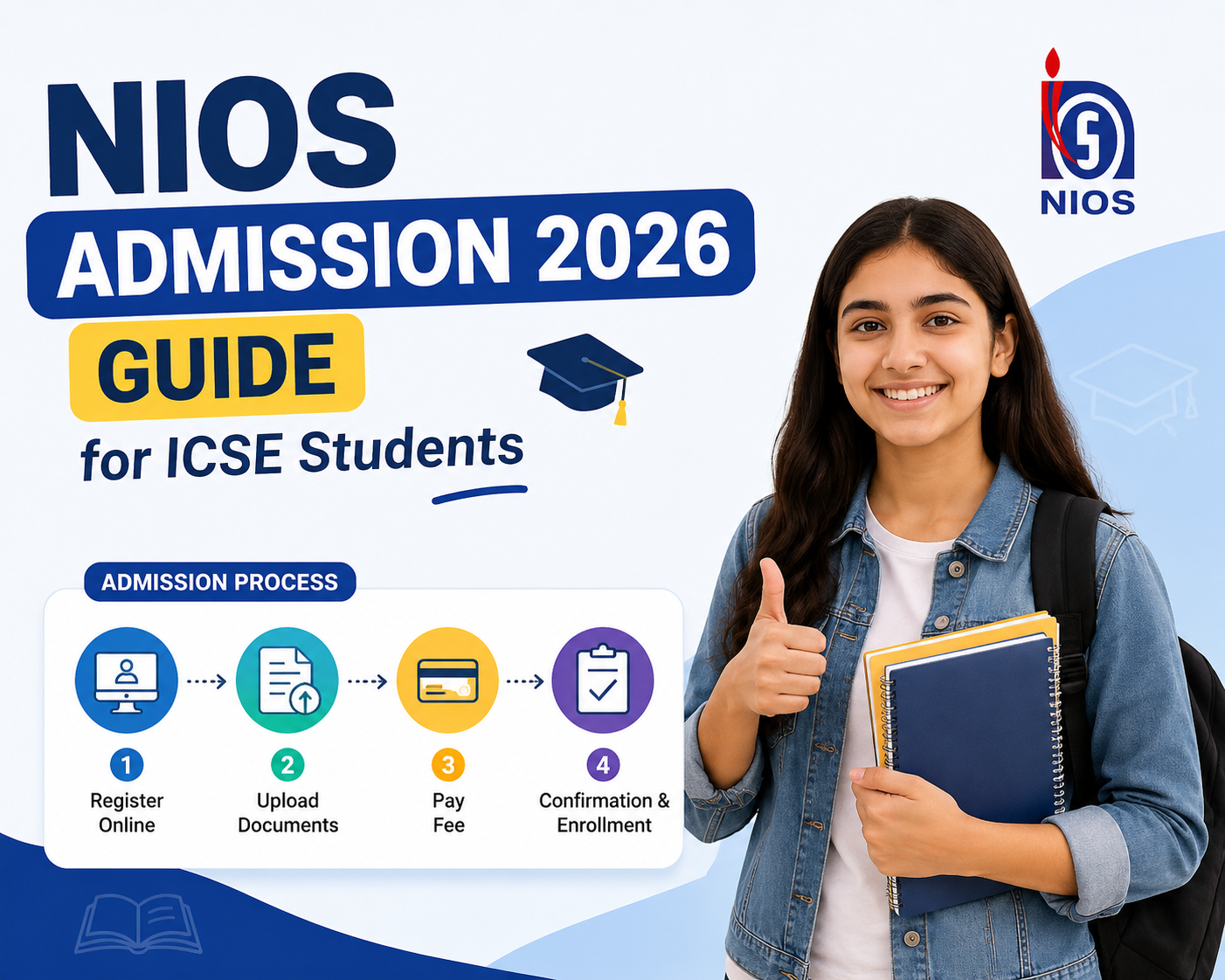
The admission process for open schooling is designed to be simple and fully online, making it accessible for students from different educational backgrounds. Applicants first need to visit the official portal and create an account using basic personal details. After registration, they must fill out the application form carefully, selecting their preferred subjects and course level.
The next step involves uploading necessary documents such as previous academic records, identity proof, and photographs in the prescribed format. Once the form is completed, students are required to pay the admission fee through available online payment methods. The NIOS Admission 2026 Guide for ICSE Students helps applicants understand each of these steps clearly so they can complete the process without confusion or errors.
To complete the admission process smoothly, students need to keep a set of basic documents ready before applying. These generally include the ICSE mark sheet or previous academic certificate as proof of qualification, along with a valid identity proof such as Aadhaar card, passport, or school ID.
Recent passport-size photographs are also required in the prescribed format for uploading on the application form. In addition, address proof details may be needed to verify the applicant’s residence. Having all these documents prepared in advance helps avoid delays or errors during submission and ensures a hassle-free application experience.
Open schooling offers a wide range of subject choices that allow students to design their academic path based on their interests and future goals. Learners can select from major streams such as Science, Commerce, and Arts, depending on what they wish to pursue further in higher education or careers.
One of the key advantages is the flexibility in choosing subject combinations, which means students are not restricted to rigid stream structures as in traditional schooling. This allows them to mix and match subjects according to their strengths and preferences, making learning more personalized and manageable.
Admission in open schooling is usually conducted in multiple cycles throughout the year, giving students enough flexibility to apply at a suitable time. For the 2026 session, the admission process is generally expected to open in two main phases, allowing learners to enroll during different periods instead of a single fixed window.
Each cycle has its own set of deadlines for registration, document submission, and fee payment, which students must follow carefully to avoid missing enrollment opportunities. Staying updated with official notifications is important, as dates may vary slightly depending on the session and course level.
Open schooling has become a practical alternative for students who need more flexibility in their academic journey. It allows learners to continue their education without the limitations of a traditional classroom system while still maintaining recognized certification for higher studies.
For ICSE students, understanding the process, eligibility, and benefits can make it easier to decide whether this path aligns with their goals. Overall, the NIOS Admission 2026 Guide for ICSE Students serves as a helpful resource for those looking to choose a more adaptable and self-paced approach to education.
0 Response

Stay updated with the latest news, articles and updates directly into your box