Get in Touch
We will get back to you within 24 hours.
We will get back to you within 24 hours.
Welcome to MVS Blog
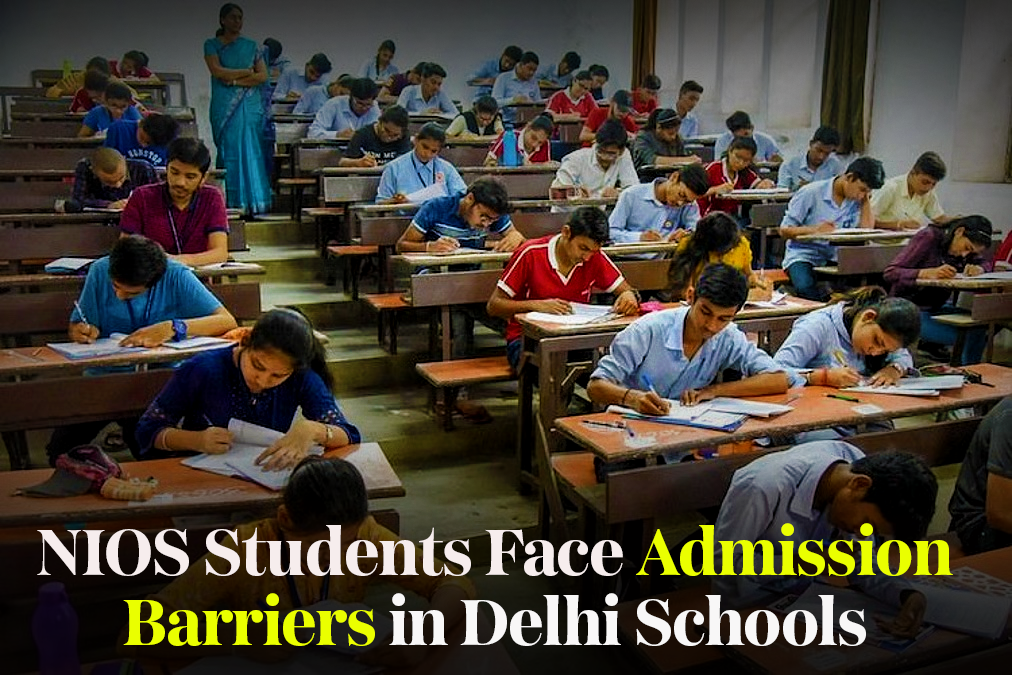
In recent months, concerns have emerged regarding reports that some Delhi schools are not allowing NIOS (National Institute of Open Schooling) students to take admission in the Science and Commerce streams. This has created uncertainty among students and parents, especially those who have chosen NIOS for its flexible learning system. Since NIOS is a recognized educational board, these reports have sparked discussions about equal access to education and admission opportunities.
Understanding this issue is important because it directly affects the academic future of many students. Parents and students need clear information about NIOS recognition, admission eligibility, and their available options. Being aware of the facts can help them make informed decisions and avoid confusion caused by misinformation.
Recent reports suggest that some schools in Delhi have denied admission to students from the National Institute of Open Schooling (NIOS) who wish to pursue Science and Commerce streams. This has raised concerns because NIOS is a recognized board, and many students choose it for its flexible learning system. The reported admission restrictions have left several students uncertain about their educational future.
The reports have created confusion and anxiety among students and parents, who fear that NIOS learners may not receive equal opportunities in mainstream education. Many are seeking clarity on whether these restrictions are based on official policies or individual school admission criteria. Parents also want assurance that choosing NIOS will not limit their children's higher education and career options.
Many schools have their own admission guidelines based on factors such as available seats, subject requirements, academic performance, and institutional policies. In some cases, these internal policies may affect the admission of NIOS students into Science and Commerce streams. However, such decisions may vary from one school to another and should not be considered a general rule for all institutions.
One of the major reasons behind admission issues is the lack of awareness about NIOS. Although NIOS is a recognized national board, some schools may have misconceptions about its curriculum, examination pattern, or academic standards. These misunderstandings can sometimes influence admission decisions, even when students meet the required eligibility criteria.
Admission delays can also arise due to administrative reasons, such as document verification, subject equivalency, seat availability, or interpretation of admission guidelines. In some cases, schools may require additional clarification before approving admissions for NIOS students.
Yes, the National Institute of Open Schooling (NIOS) is a recognized board established by the Ministry of Education, Government of India. It is the country's largest open schooling system and provides Secondary (Class 10) and Senior Secondary (Class 12) education through a flexible learning approach. NIOS certificates are valid for higher education, government jobs, and other educational opportunities, subject to the eligibility requirements of the respective institution or organization.
NIOS certificates are accepted by many universities, colleges, and educational institutions across India. Students who meet the required eligibility criteria can also apply for various competitive examinations, including engineering, medical, and other entrance exams, as well as government recruitment processes. However, candidates should always check the specific eligibility rules of the university, exam authority, or recruiting organization before applying.
Yes, NIOS students can pursue Science or Commerce, provided they meet the admission requirements set by the school, college, or educational institution. Since admission policies may differ from one institution to another, students should carefully review the eligibility criteria before applying. Some schools may also have additional requirements based on seat availability or academic performance.
Students applying for Science or Commerce should ensure that they have studied the required subjects and meet the minimum marks or qualification criteria prescribed by the institution. For example, admission to the Science stream may require a background in Mathematics and Science, while Commerce may have different subject requirements depending on the school.
Schools may evaluate several factors during the admission process, including previous academic records, subject combinations, eligibility criteria, availability of seats, and document verification. Some institutions may also have their own internal admission policies that applicants need to satisfy.
Students who complete their education through the National Institute of Open Schooling (NIOS) have the same academic recognition as students from other recognized boards. Since NIOS is established under the Ministry of Education, Government of India, its certificates are valid for higher education, government jobs, and various competitive examinations, subject to the eligibility criteria prescribed by the respective institution or authority.
NIOS students have the right to apply for admission to universities, colleges, and professional courses, provided they meet the required eligibility conditions. They should not face discrimination solely because they studied through an open schooling system. Educational institutions are expected to follow their published admission policies fairly and transparently while ensuring equal opportunities for all eligible candidates.
If a school denies admission, the first step is to carefully review its official admission criteria. Students should ensure they meet all requirements, including subject combinations, minimum marks, age criteria (if applicable), and document submission guidelines. Sometimes, admission issues arise simply because a required condition has not been fulfilled.
Students and parents should communicate directly with the school's admission office or principal to understand the exact reason for the rejection. Requesting a written explanation or clarification can help resolve misunderstandings and provide a clear understanding of the school's admission policy.
If students believe they have been denied admission despite meeting all published eligibility criteria, they may approach the relevant education authorities or regulatory bodies for clarification and guidance. Keeping copies of admission forms, certificates, and correspondence with the school can be helpful during this process.
If admission is not possible at one institution, students should consider applying to other schools or educational institutions that accept eligible NIOS students. Exploring multiple options can help avoid delays in continuing their education and ensure they stay on track with their academic goals.
MVS Foundation provides complete assistance to students who wish to pursue their education through NIOS. From understanding eligibility requirements to completing the admission process, the team helps students at every stage, ensuring a smooth and hassle-free experience.
Choosing the right educational path can be confusing. MVS Foundation offers personalized counseling to help students and parents understand NIOS, available study options, examination patterns, and future academic opportunities. This guidance enables students to make informed decisions based on their career goals.
Selecting the right subjects is essential for higher education and career planning. MVS Foundation helps students choose subject combinations that align with their interests and meet the eligibility requirements for universities, professional courses, and competitive examinations.
Admission to NIOS requires accurate documentation and timely submission of forms. MVS Foundation assists students in preparing, verifying, and submitting the necessary documents, reducing the chances of errors or delays during the admission process.
Yes. NIOS is a recognized board under the Ministry of Education, Government of India. Students can apply for Science and Commerce streams, provided they meet the admission requirements of the respective school or institution.
2. Can NIOS students apply to regular schools?
Yes. NIOS students may apply to regular schools or other educational institutions, depending on the school's admission policy, eligibility criteria, seat availability, and subject requirements.
3. Is NIOS accepted for JEE and NEET?
Yes. NIOS students can apply for JEE, NEET, and other competitive examinations if they fulfill the eligibility criteria specified by the respective examination authorities. Students should always check the latest official guidelines before applying.
4. What should I do if a school refuses my admission?
If your admission is denied, first verify that you meet the school's eligibility criteria. Then, contact the school administration to understand the reason for the decision. If required, seek clarification from the concerned education authorities and explore other institutions that accept eligible NIOS students.
5. Are NIOS certificates recognized across India?
Yes. NIOS certificates for Class 10 and Class 12 are recognized across India. They are accepted by many universities, colleges, government organizations, and employers, subject to the eligibility requirements of the respective institution or authority.
The recent concerns regarding Science and Commerce admissions for NIOS students in some Delhi schools have highlighted the importance of understanding official admission policies and the recognition of NIOS. While admission requirements may differ from one institution to another, NIOS remains a recognized board, and its students have access to higher education and competitive examinations, provided they meet the prescribed eligibility criteria. Staying informed and verifying the latest admission guidelines can help students make confident academic decisions.
Facing an admission challenge does not mean your educational journey has come to an end. If you encounter difficulties, take the time to understand the admission requirements, communicate with the concerned institution, and explore alternative options. Seeking guidance from experienced counselors or educational experts can help you find the best path forward. With the right information, careful planning, and determination, you can continue working toward your academic and career goals.
0 Response

Stay updated with the latest news, articles and updates directly into your box