Get in Touch
We will get back to you within 24 hours.
We will get back to you within 24 hours.
Welcome to MVS Blog
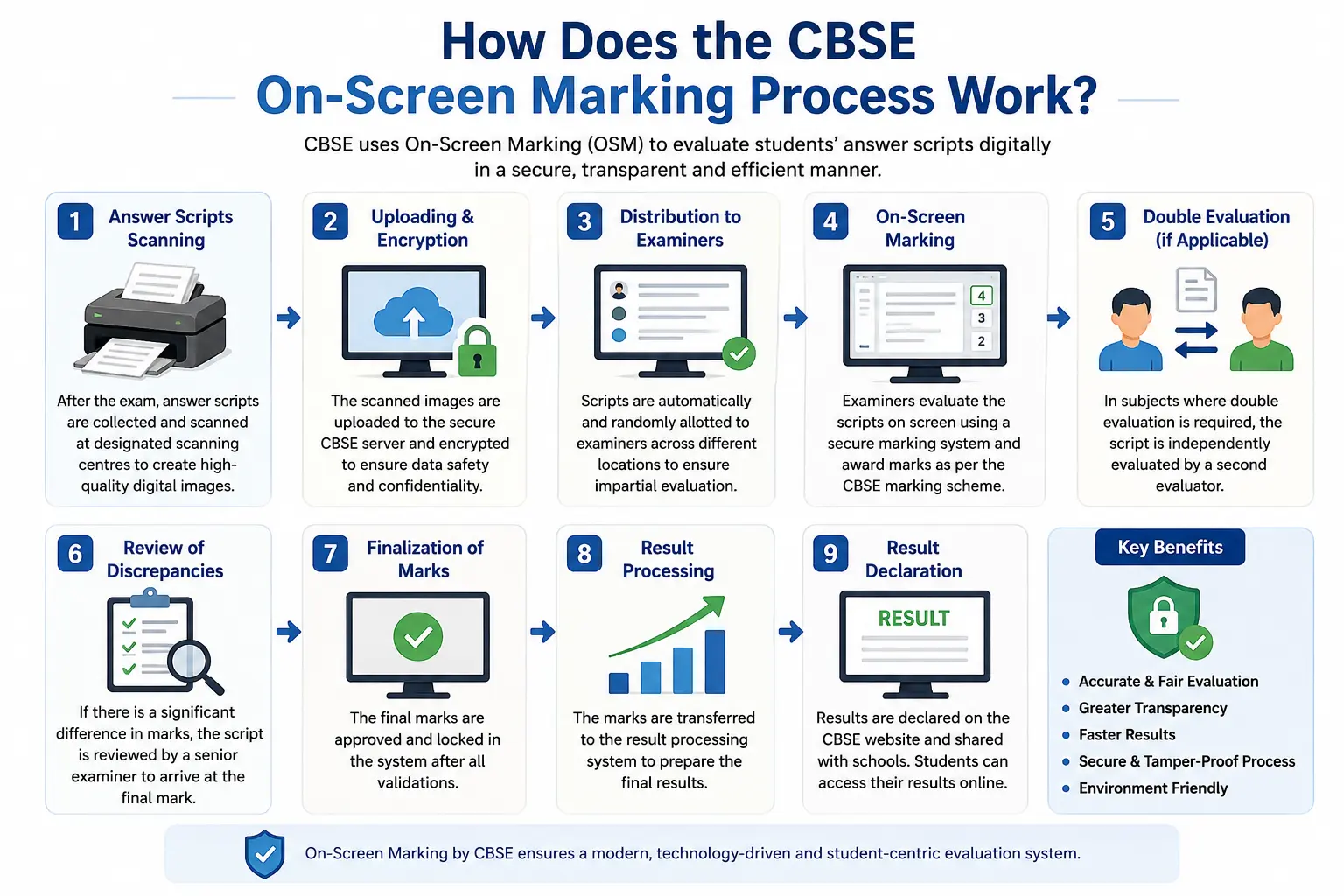
CBSE On-Screen Marking (OSM) is a modern digital evaluation system used by CBSE to check answer sheets online instead of traditional paper checking. It helps examiners view scanned copies of students’ answer sheets on a computer screen and award marks digitally.
The meaning of CBSE On-Screen Marking (OSM) is a technology-based marking process where physical answer sheets are converted into digital format for evaluation.
In simple terms, CBSE On-Screen Marking (OSM) is a system of digital evaluation of answer sheets, ensuring faster, more accurate, and transparent checking of exam papers.
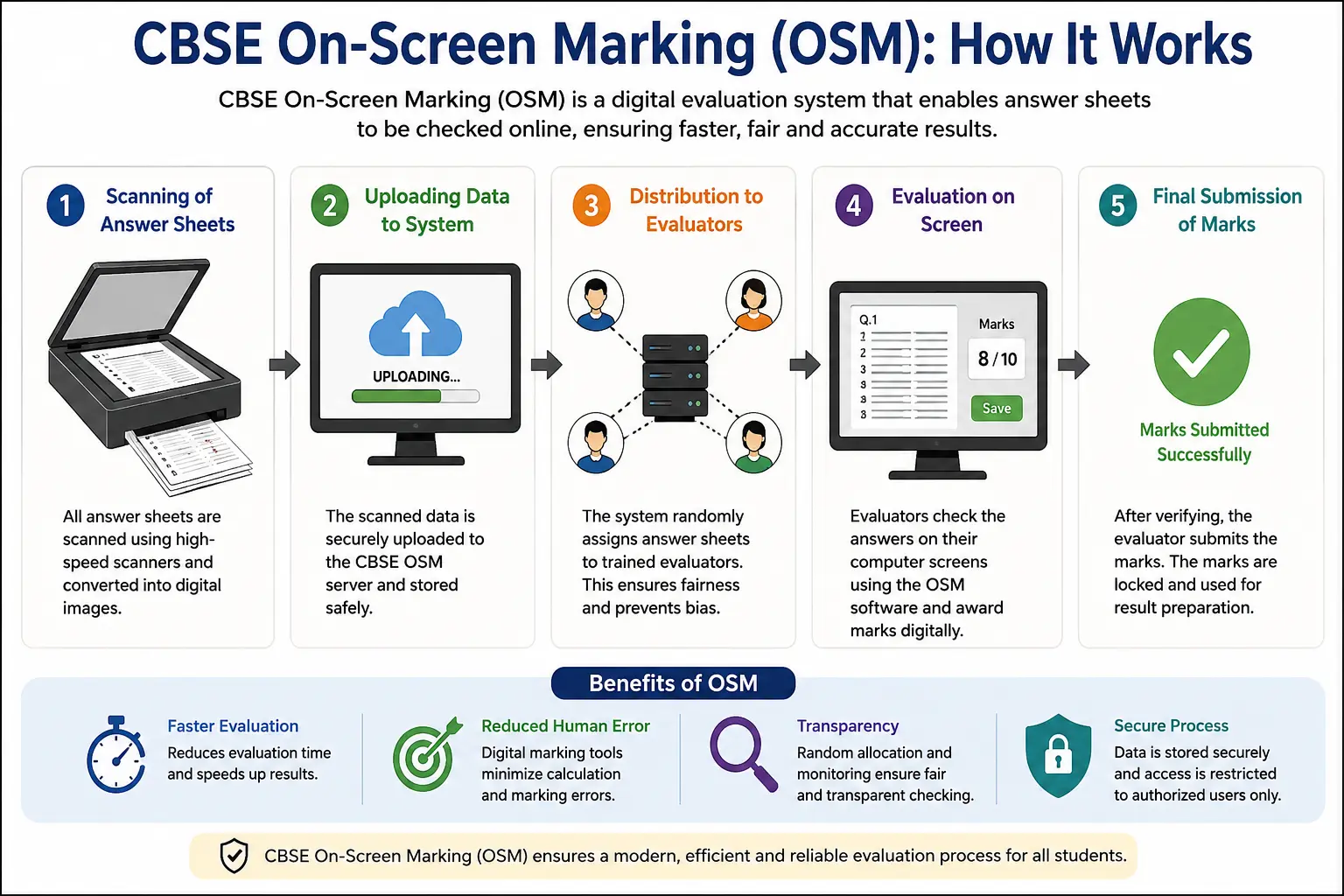
In the CBSE On-Screen Marking (OSM) process, the evaluation of answer sheets begins with the scanning of answer sheets, where all physical copies of students’ exam papers are carefully scanned and converted into high-quality digital images. This step ensures that every written response is clearly visible and securely stored in the system.
After scanning, the next step is uploading data to the system, where the digitized answer sheets are uploaded to a centralized CBSE server. This makes the data organized, secure, and accessible only through authorized login, ensuring transparency and preventing any misuse or loss of answer sheets.
Finally, the system performs the distribution to evaluators, where the uploaded answer sheets are randomly assigned to trained examiners. These evaluators check the answers directly on-screen using the CBSE On-Screen Marking (OSM) software and award marks digitally, ensuring fair, unbiased, and efficient evaluation.
In the CBSE On-Screen Marking (OSM) step-by-step working process, the first stage is answer sheet digitization, where all physical exam copies are scanned and converted into clear digital images so they can be evaluated online. This ensures that every page of the student’s answer sheet is properly stored in the system.
After digitization, the system performs random allocation to examiners, where each answer sheet is automatically assigned to different trained evaluators. This random distribution helps maintain fairness and prevents any bias in checking.
Next comes marking on screen using software, where examiners log into the CBSE OSM platform and evaluate answers directly on their computer screens. They can zoom, highlight, and enter marks digitally for each question.
Finally, there is the final submission of marks, where the examiner reviews the checked answers and submits the marks through the system. Once submitted, the marks are securely recorded and used for result preparation, ensuring accuracy and transparency in the evaluation process.
In the CBSE On-Screen Marking (OSM) system, one of the major benefits is faster evaluation, as answer sheets are checked digitally, which significantly reduces the time required for manual checking and helps in quicker result processing.
Another important advantage is reduced human error, because the system provides digital tools for marking, calculation, and record-keeping, minimizing mistakes that often occur in traditional paper-based evaluation.
The system also ensures transparency in checking, as every answer sheet is scanned, stored, and evaluated on-screen, allowing better monitoring and accountability during the marking process.
Lastly, CBSE On-Screen Marking (OSM) provides a secure exam process, where all answer sheets are safely stored in digital form on secure servers, preventing loss, tampering, or unauthorized access, ensuring fairness and reliability in evaluation.
In the CBSE On-Screen Marking (OSM) system, one of the key features is a digital interface for teachers, where evaluators can easily log in and check scanned answer sheets on a computer screen. This interface is designed to be user-friendly so that teachers can smoothly evaluate answers without handling physical copies.
Another important feature is the auto-save marking system, which automatically saves the marks entered by the examiner in real time. This reduces the risk of data loss and ensures that all evaluated marks are securely stored even if there is a technical interruption.
The system also includes monitoring and moderation tools, which help CBSE track the evaluation process in real time. These tools ensure that marking is fair, consistent, and accurate by allowing supervisors to review and moderate the checking process whenever required.
In the CBSE On-Screen Marking (OSM) system, one of the main challenges is technical issues, such as slow internet, software glitches, or system errors that can sometimes delay the evaluation process and affect smooth functioning.
Another challenge is the training requirements for examiners, because teachers need proper training to use the digital marking system effectively. Without adequate training, it may become difficult for evaluators to understand all tools and features of the OSM platform.
The system also faces system dependency, meaning the entire evaluation process depends heavily on computers, software, and internet connectivity. If any technical component fails, it can temporarily interrupt the marking process and slow down exam result preparation.
In modern examinations, CBSE On-Screen Marking (OSM) plays an important role as it represents a shift from traditional paper-based checking to a more advanced digital evaluation system. Its importance lies in making the assessment process faster, more accurate, and transparent, which helps improve the overall efficiency of exam management in CBSE (Central Board of Secondary Education) . It also reduces manual workload for examiners and ensures fair evaluation for students across the country.
Looking at the future, digital evaluation in CBSE is expected to become even more advanced with improved technologies, better automation, and stronger security systems. The CBSE On-Screen Marking (OSM) system is likely to expand further, making the entire examination process more streamlined, reliable, and technology-driven, ensuring a modern and efficient education assessment system.
0 Response

Stay updated with the latest news, articles and updates directly into your box