Get in Touch
We will get back to you within 24 hours.
We will get back to you within 24 hours.
Welcome to MVS Blog
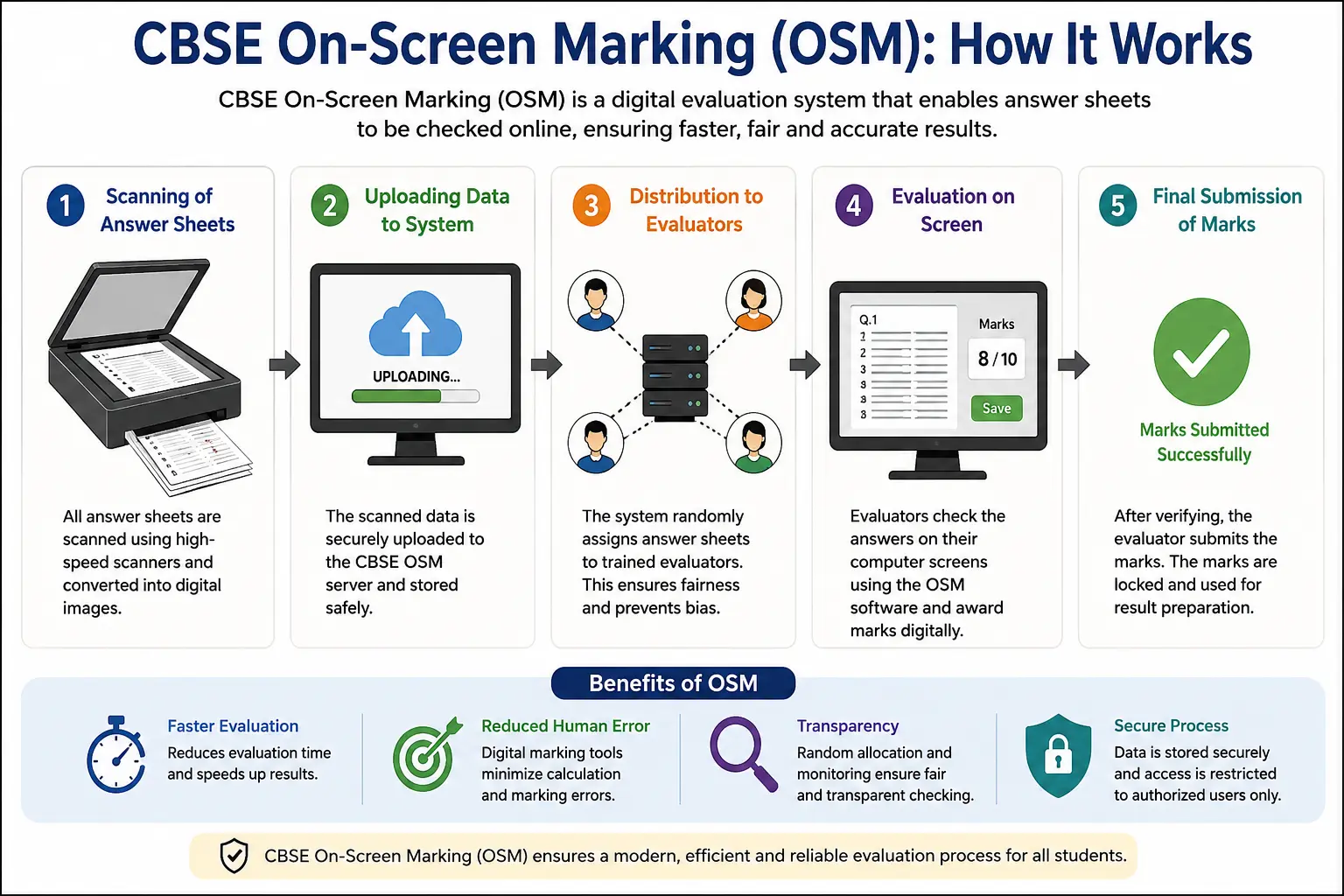
The CBSE On-Screen Marking (OSM) Process is a modern digital system used to evaluate student answer sheets online. Instead of checking physical copies manually, examiners assess scanned answer sheets on a computer screen through a secure software system. This method helps improve accuracy, speed, and transparency in the evaluation process.
Digital evaluation has become important in CBSE exams because it reduces human errors, speeds up result preparation, and ensures fair marking for students. The system also allows better monitoring of examiners and automatic calculation of marks.
CBSE introduced On-Screen Marking to replace the traditional paper-checking method. Earlier, teachers had to carry and check physical answer sheets manually, which was time-consuming and more prone to mistakes. With online marking, the evaluation process has become faster, safer, and more efficient.
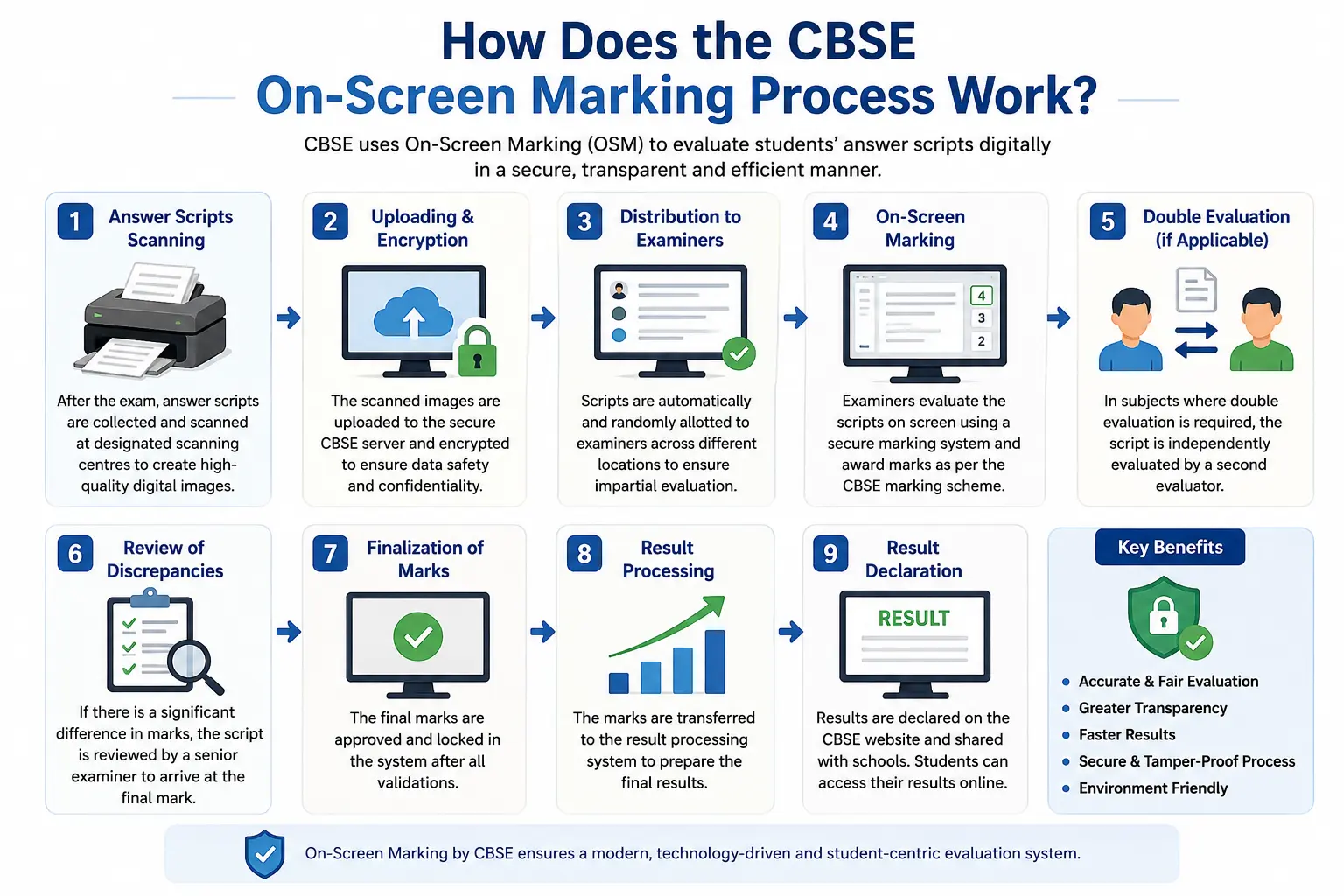
The scanning of answer sheets is one of the most important steps in the CBSE On-Screen Marking Process. After the examinations are completed, student answer sheets are collected from different exam centers and sent to authorized scanning centers for digital processing.
At the scanning centers, each answer sheet is scanned using high-quality scanners to create clear digital copies. The scanning process ensures that every page, handwriting detail, and answer is properly visible to examiners during online evaluation.
Once the scanning is completed, the digital copies of the answer sheets are securely uploaded to the CBSE server. These uploaded files are then stored safely in the system and distributed digitally to examiners for on-screen checking. This process helps maintain accuracy, security, and faster evaluation of exam papers.
In the CBSE On-Screen Marking Process, scanned answer sheets are distributed to examiners through a secure digital system. The system randomly assigns answer copies to teachers, ensuring fairness and avoiding favoritism during evaluation.
CBSE uses an encrypted online platform to keep the evaluation process safe and protected. Only authorized examiners can access the answer sheets using secure login credentials, which helps prevent unauthorized access or misuse of data.
The system also includes strong confidentiality and data protection features to protect student information and maintain the privacy of examination records. This secure digital process improves transparency, reliability, and trust in the CBSE evaluation system.
In the CBSE On-Screen Marking Process, examiners must log in to the evaluation system using secure credentials provided by CBSE. These login details help ensure that only authorized teachers can access and evaluate student answer sheets.
Before starting the evaluation work, CBSE provides proper training to examiners so they can understand the online marking system, digital tools, and evaluation guidelines. This training helps teachers use the software accurately and efficiently.
The system also follows a strict authentication process to verify the identity of examiners before granting access. Secure login procedures and monitoring features help maintain the safety, transparency, and reliability of the online evaluation process.
The digital evaluation process in CBSE On-Screen Marking allows examiners to check student answer sheets directly on a computer screen. Instead of using physical copies, teachers evaluate scanned answer sheets through specialized online software.
During the evaluation, examiners use digital marking tools and annotations to highlight mistakes, add remarks, and review answers carefully. The system provides easy-to-use features that help teachers check answers more accurately and efficiently.
Marks are awarded digitally within the software, reducing the chances of calculation or totaling errors. The platform also includes an auto-save feature that automatically saves the examiner’s progress during evaluation, preventing data loss and ensuring smooth checking of answer sheets.
The CBSE On-Screen Marking Process includes a strong quality check and monitoring system to ensure accurate and fair evaluation of answer sheets. CBSE supervisors can monitor the evaluation process in real time, allowing them to track examiner performance and maintain consistency in marking.
To improve accuracy, evaluated answer sheets are often double-checked by senior examiners or supervisors. This helps identify any mistakes in marking, skipped answers, or incorrect awarding of marks before the final results are prepared.
The digital system also helps reduce human errors in the marking process by using automated tools and monitoring features. As a result, the evaluation becomes more reliable, transparent, and efficient for both students and examiners.
In the CBSE On-Screen Marking Process, the system automatically calculates the total marks awarded by examiners. Once the teacher enters marks digitally for each answer, the software generates the final total instantly and accurately.
This automatic totaling system helps eliminate manual calculation mistakes that were common in traditional paper checking. It reduces the chances of errors in addition, missing marks, or incorrect totals during evaluation.
The digital process also speeds up result preparation because marks are calculated and stored automatically within the system. As a result, CBSE can process exam results faster, more accurately, and with greater efficiency.
The CBSE On-Screen Marking system offers several advantages that improve the overall examination evaluation process. One of the biggest benefits is the faster evaluation of answer sheets, which helps CBSE prepare and announce results more quickly.
The digital marking system also increases transparency and accuracy in checking. Since marks are awarded online and monitored through software, the chances of human errors, unfair marking, and calculation mistakes are greatly reduced.
Another major advantage is reduced paper handling, as examiners check scanned copies instead of physical answer sheets. This makes the process safer, more organized, and easier to manage.
CBSE On-Screen Marking also improves efficiency for both teachers and students. Examiners can evaluate papers more conveniently using digital tools, while students benefit from a fair, reliable, and quicker result process.
Although the CBSE On-Screen Marking system offers many benefits, it also faces certain challenges during the evaluation process. One common issue is internet and technical problems, such as slow connectivity, software errors, or system interruptions, which can affect the smooth functioning of online evaluation.
Another challenge is the need for proper training for examiners. Teachers must understand how to use the digital marking software, online tools, and evaluation features correctly. Without adequate training, examiners may face difficulties while checking answer sheets online.
The system is also highly dependent on technology during evaluation. Any server issue, power failure, or technical malfunction can delay the marking process and affect overall efficiency. Therefore, strong technical support and reliable digital infrastructure are essential for successful on-screen marking.
The future of CBSE (Central Board of Secondary Education) digital evaluation is expected to become more advanced with the growing use of AI and modern digital tools. Technologies such as artificial intelligence, automated monitoring, and smart evaluation systems can help improve accuracy, reduce errors, and make the checking process faster and more efficient.
CBSE is also likely to continue improving its online assessment systems by introducing better software, stronger security features, and user-friendly evaluation platforms for examiners. These improvements can enhance transparency, reliability, and overall performance in the examination process.
The future scope of CBSE On-Screen Marking is very promising as digital education and online systems continue to grow in India. In the coming years, on-screen evaluation may become more widely used for different exams, helping create a faster, fairer, and more technology-driven assessment system for students and teachers.
The CBSE On-Screen Marking Process is a modern digital evaluation system that has transformed the way answer sheets are checked and assessed. From scanning answer sheets to digital evaluation, automatic totaling, and quality monitoring, the entire process helps make exam evaluation faster, safer, and more accurate.
Technology plays an important role in modern education by improving efficiency, reducing manual errors, and supporting transparent examination systems. The use of digital tools in evaluation has made the checking process more organized and reliable for both teachers and students.
CBSE On-Screen Marking has also created a fair and transparent result evaluation system by ensuring secure handling of answer sheets, accurate marking, and proper monitoring during assessment. As digital education continues to grow, online evaluation systems like OSM are expected to become even more advanced and beneficial in the future.
0 Response

Stay updated with the latest news, articles and updates directly into your box